Choosing between Snowshoe vs. Ragdoll cats comes down to the kind of companion and care routine that suits your home. Snowshoes are shorthaired, athletic cats with distinctive white markings and blue eyes, while Ragdolls are larger, semi-longhaired cats with pointed coats and generally easygoing temperaments. Both breeds can be affectionate, intelligent, and playful, but individuals vary in sociability, energy, and vocalization.
Last Updated: October 24, 2026
This comparison covers appearance, adult size, personality, training, activity, grooming, health conversations to have with a veterinarian, and how to choose responsibly. Breed information is cross-checked against TICA’s Snowshoe Breed Profile, TICA’s Ragdoll Breed Profile, and CFA’s Ragdoll Breed Information.
Ragdolls are easier to train because they are laid-back, while Snowshoes may need more patience. Ragdolls require regular vet check-ups for heart issues, while snowshoes need consistent dental care. Explore further to uncover more about these charming feline breeds.
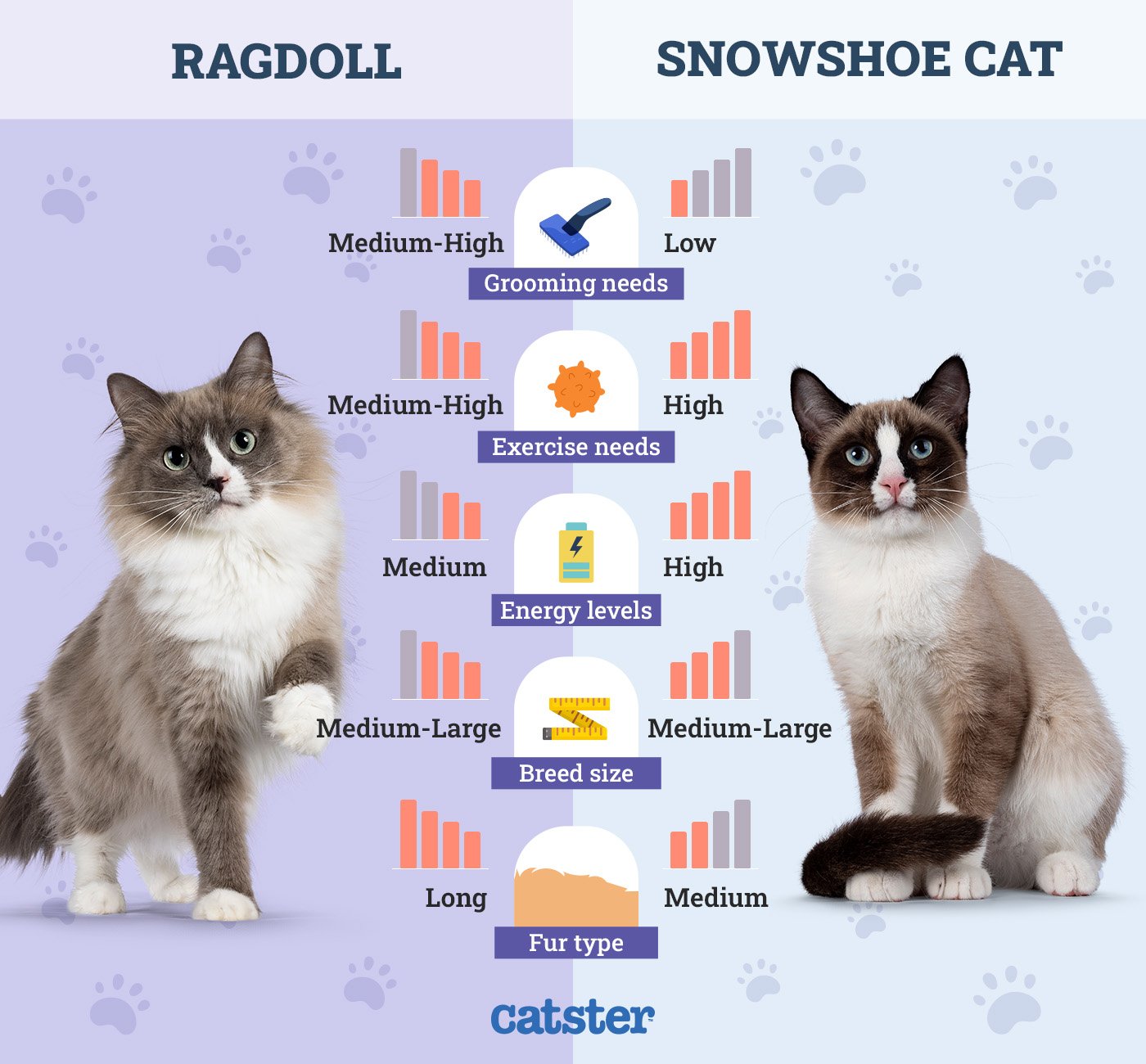
Snowshoe vs Ragdoll Cats: At a Glance
| Feature | Ragdoll | Snowshoe |
|---|---|---|
| Coat | Semi-long, silky coat | Short, smooth coat |
| Typical Adult Weight | Females often 10 to 15 lb; males often 15 to 20 lb | Females often 7 to 10 lb; males often 9 to 12 lb |
| Eyes and Markings | Blue eyes; pointed coat with colorpoint, mitted, or bicolor patterns | Blue eyes; pointed coat with white feet and distinctive white markings |
| Activity | Moderately active, enjoys regular play | Often active and curious, benefits from enrichment |
| Grooming | Comb at least once or twice a week and check for tangles | Weekly brushing is often sufficient |
| Temperament | Often gentle, sociable, and relaxed | Often intelligent, social, playful, and inquisitive |
| Best Match | People who want a larger companion and can maintain coat care | People who want an active, shorthaired companion and enjoy interactive play |
These are general breed tendencies, not guarantees for an individual cat. Weight and lifespan estimates vary by source, sex, genetics, diet, indoor or outdoor risks, and veterinary care. Use the ranges as a starting point rather than a prediction of your cat’s adult size or lifespan.
Ragdoll Cat Breed Overview
The Ragdoll was developed in Riverside, California, in the 1960s by breeder Ann Baker from selected longhaired cats. Today, the breed is known for its large, sturdy body, semi-long coat, blue eyes, pointed coloring, and generally people-oriented temperament. Breed standards and registration requirements are maintained by cat registries, so prospective buyers should review pedigree documents rather than rely on appearance alone. See TICA’s Ragdoll Breed Profile for current breed characteristics.
Ragdolls have a pointed coat pattern with body fur lighter than the ears, face, legs, and tail. The recognized pattern types include colorpoint, mitted, and bicolor. Colors may include seal, blue, chocolate, lilac, red, and cream, with additional variations depending on the registry. For the standard description, see CFA’s Ragdoll Breed Information.
Ragdoll Personality and Temperament
Ragdolls are generally described as affectionate, gentle, and sociable. Many like staying near their people and may follow family members around the home. They often enjoy play and can learn games such as fetch, but their needs vary. Supervise interactions with young children and introduce other pets slowly, because a relaxed breed reputation does not guarantee that every individual cat will enjoy being handled or sharing space.
The breed’s name comes from reports about the relaxed behavior of some foundation cats. However, going limp when picked up is not a reliable trait of every Ragdoll, and cats should never be forced to be held. Let the cat choose contact, support its body securely, and watch for signs that it wants to move away.
Ragdoll Training and Enrichment
Ragdolls can learn simple cues, target training, puzzle games, and sometimes fetch. Keep sessions short and reward desired behavior with a treat, toy, or praise. Use positive reinforcement rather than punishment, and remember that motivation varies by cat. For more on the breed’s trainable, playful temperament, see CFA’s Ragdoll Breed Information.
Their relaxed temperament makes them less likely to resist training, making them suitable for owners who prefer a low-key training experience. Ragdolls can be taught to use a litter box easily and may even be trained to perform simple tricks.
Ragdoll Exercise and Activity
Ragdolls are often moderately active rather than inactive. Plan daily interactive play with wand toys, balls, food puzzles, or climbing and scratching furniture. Activity supports a healthy weight and gives indoor cats mental stimulation. Adapt play to the cat’s age, mobility, and veterinary advice rather than treating any fixed number of minutes as a rule for every Ragdoll.
Ragdoll Health and Preventive Care
No breed profile can predict an individual cat’s health. One inherited concern associated with Ragdolls is hypertrophic cardiomyopathy (HCM), a disease of the heart muscle. Ask a breeder about the parents’ health history and relevant genetic or cardiac screening, and discuss the limits of testing with your veterinarian. Like all cats, Ragdolls also benefit from routine dental care, preventive veterinary visits, appropriate nutrition, exercise, and weight monitoring. Learn about the UC Davis Veterinary Genetics Laboratory Ragdoll HCM Test, and ask your veterinarian how results should inform care.
| Health Topic | Practical Step |
|---|---|
| Heart health | Ask a breeder about HCM screening and discuss family history with a veterinarian. |
| Dental health | Ask about tooth brushing, oral exams, and professional cleaning when needed. |
| Healthy weight | Measure meals, provide daily play, and monitor body condition. |
| Preventive care | Maintain regular veterinary exams, vaccinations, and parasite prevention as recommended. |
Ragdoll Grooming and Coat Care
Ragdoll cats have long, silky fur that requires regular grooming to prevent matting and tangles. Weekly brushing is recommended to keep their coat in good condition and reduce shedding. Regular grooming sessions also allow checking for any skin issues or parasites. Bathing is not frequently required but can be done occasionally to keep their coat clean and healthy. Due to their docile nature, Ragdolls usually tolerate grooming sessions well, making it a manageable task for their owners.
Who Is a Ragdoll Cat Best Suited For?
Ragdoll Cats are best suited for individuals or families looking for a calm, affectionate, low-energy pet. Their gentle nature makes them ideal companions for children and other pets, and they thrive in a serene environment where they can enjoy plenty of human interaction and cuddles. Ragdolls are particularly well-suited for indoor living, making them perfect for apartment dwellers or those with a quieter lifestyle.
Snowshoe Cat Breed Overview
The Snowshoe is a shorthaired, blue-eyed breed known for its pointed coat and contrasting white feet and facial markings. Its personality can range from shy to outgoing, but TICA describes the breed as intelligent, amusing, and loyal. Many Snowshoes enjoy company and interactive play, although how well an individual cat tolerates alone time depends on its temperament and routine. Read TICA’s Snowshoe Breed Profile for breed-standard details.
Some Snowshoes are talkative and active, and many enjoy games that use their curiosity and problem-solving skills. Do not assume every Snowshoe will be vocal or constantly energetic. Provide interactive play, climbing options, food puzzles, and predictable social time, then adjust the routine to the cat’s age and preferences.
Snowshoe Training and Enrichment
Snowshoes may enjoy learning cues, exploring puzzle feeders, chasing toys, and playing fetch. Teach one behavior at a time using short sessions and positive reinforcement such as treats or play. If you want to introduce leash walks, use a well-fitted cat harness and train gradually indoors first. Not every cat will enjoy a harness, so follow the cat’s comfort level.
They can be trained to walk on a leash, and for their safety and comfort, a harness is preferable to a collar.
Interestingly, many Snowshoes are fond of water, making training sessions involving water play particularly engaging. Their high energy and curiosity make them a fun and rewarding breed to train.
Snowshoe Exercise and Enrichment
Snowshoes are often active and curious, so daily play and enrichment are important. Try wand toys, soft balls, treat puzzles, cat trees, and safe window perches. A smaller home can work well when it has vertical space and enough play opportunities. The goal is to offer regular outlets for normal feline behaviors, not to provide a particular home size or outdoor access.
Snowshoe Health and Preventive Care
Published breed-health information for Snowshoes is less extensive than for some more common breeds, so avoid assuming that a long list of conditions is inevitable or unique to every Snowshoe. Ask a breeder or rescue about known health history, and schedule routine veterinary checks. Like all cats, Snowshoes benefit from dental care, balanced nutrition, clean water, preventive care, and a healthy weight. The Zoetis Snowshoe Breed Guide offers a general overview, but individual medical decisions should be made with a veterinarian.
| Care Area | What Owners Can Do |
|---|---|
| Routine checkups | Follow a veterinarian’s advice for wellness exams and age-appropriate screening. |
| Dental health | Introduce tooth brushing with cat-safe toothpaste and ask about oral exams. |
| Urinary health | Provide fresh water and monitor litter box habits. Straining or inability to urinate needs urgent veterinary attention. |
| Weight and activity | Measure food portions and provide daily play suited to the cat. |
Snowshoe Grooming and Coat Care
Snowshoe cats, with their short and smooth coats, require less grooming than Ragdolls. Regular brushing once a week is sufficient to keep their fur clean and reduce shedding. Their grooming routine is relatively low-maintenance, which is ideal for busy owners. Occasional baths may be necessary, but their short coat typically stays clean with minimal effort. Regular grooming also helps check for skin problems and keeps the cat comfortable and looking its best.
Who Is a Snowshoe Cat Best Suited For?
Snowshoe Cats are ideal for active families or individuals who enjoy a playful and energetic pet. Their high energy levels and social nature mean they thrive in dynamic households with plenty of interactive play and mental stimulation opportunities. Snowshoes are well-suited for homes with other pets and children, as they love engaging in family activities. They are perfect for those who can offer a lively and interactive environment.
Which Cat Fits Your Lifestyle?
A Ragdoll may be a better match if you want a larger cat with a semi-long coat and a generally relaxed, people-friendly temperament, and you can keep up with regular combing. A Snowshoe may suit you better if you prefer a short coat, enjoy interactive games, and want to provide daily enrichment for an often curious, athletic cat. Neither breed is automatically easier in every home.
A Quick Decision Checklist
- Choose based on the individual cat’s personality, not breed stereotypes alone.
- Consider how much brushing, shedding cleanup, play, and social time you can offer each day.
- Plan for routine veterinary care, quality food, litter, scratching surfaces, enrichment, and unexpected medical costs.
- If you have children or other pets, ask how the cat has responded to them and arrange slow, supervised introductions.
- Keep cats safely indoors or provide secure outdoor access, such as a catio or supervised harness walks if the cat tolerates them.
Questions to Ask a Breeder or Rescue
Before You Commit
- Can I see the cat’s veterinary records and learn about any known health concerns?
- If the cat is sold as a pedigree, can the breeder provide verifiable registration and parent health information?
- How has the cat been socialized, and what kind of routine, play, and grooming does it currently have?
- What support or return policy is offered if a serious health or placement issue arises?
Conclusion
When comparing a Snowshoe vs. Ragdoll cat, start with coat care, typical energy, adult size, and the kind of interaction you enjoy. Ragdolls usually need more frequent coat combing, while Snowshoes commonly need more structured play and enrichment. Both need attention, preventive care, and an environment where they can feel safe.
Before choosing either breed, meet the cat where possible, confirm health and pedigree documents when relevant, and ask what support the breeder or rescue provides. For more details, read Tuxedo Black and White Ragdoll Cat for related Ragdoll coat information, visit the About the Cat Care Author Page, or explore the Cats Website Home Page.
Frequently Asked Questions
What Is the Difference Between a Ragdoll and a Snowshoe?
The main differences are coat length, typical adult size, and activity. Ragdolls are larger and semi-longhaired, with pointed coats and blue eyes. Snowshoes are shorthaired, medium-sized, and recognized for blue eyes plus contrasting white feet and facial markings. Both breeds can be affectionate and trainable, and neither breed’s lifespan or personality can be guaranteed for an individual cat.
How Do I Know if My Cat Is a Snowshoe?
Snowshoes typically have blue eyes, a short pointed coat, white feet, and distinctive white markings on the face and chest. These traits can suggest the breed, but appearance alone cannot establish pedigree because mixed-breed cats may look similar. If ancestry matters, ask for registration documents from a reputable breeder or registry.
What Are the Downsides of Ragdoll Cats?
Potential challenges include regular brushing, seasonal shedding, a relatively large adult size, and the cost of routine and unexpected veterinary care. Ragdolls also enjoy companionship, so consider how long the cat would be alone. Individual needs vary, and no breed is completely free of health or behavior challenges.
Are Snowshoe Cats Cuddly?
Many Snowshoes are affectionate and enjoy being near their people, but not every cat likes being picked up or sitting on laps. Socialization, temperament, and past experiences matter. Let the cat initiate contact and respect its signals if it wants space.
Which Cat Needs More Grooming, a Snowshoe or a Ragdoll?
Ragdolls generally need more coat care because their semi-long fur can tangle. Combing once or twice a week is a useful starting point, with extra attention during shedding periods. Snowshoes have short coats, and weekly brushing is often sufficient. Adjust the schedule to your cat’s coat and needs.
Can Snowshoe and Ragdoll Cats Live in Apartments?
Both can live in apartments if their home is safe and enriched. Provide vertical climbing spaces, scratching posts, hiding spots, clean litter trays, and daily interactive play. A Snowshoe may need extra enrichment if it is especially active, while a Ragdoll still needs exercise and companionship.
Are Snowshoe Cats Hypoallergenic Compared With Ragdolls?
No cat breed can be guaranteed hypoallergenic. Snowshoes usually have shorter coats and may leave less visible loose fur than Ragdolls, but allergens are not determined only by coat length. People with allergies should spend time with the individual cat and discuss practical management with a healthcare professional before adoption.