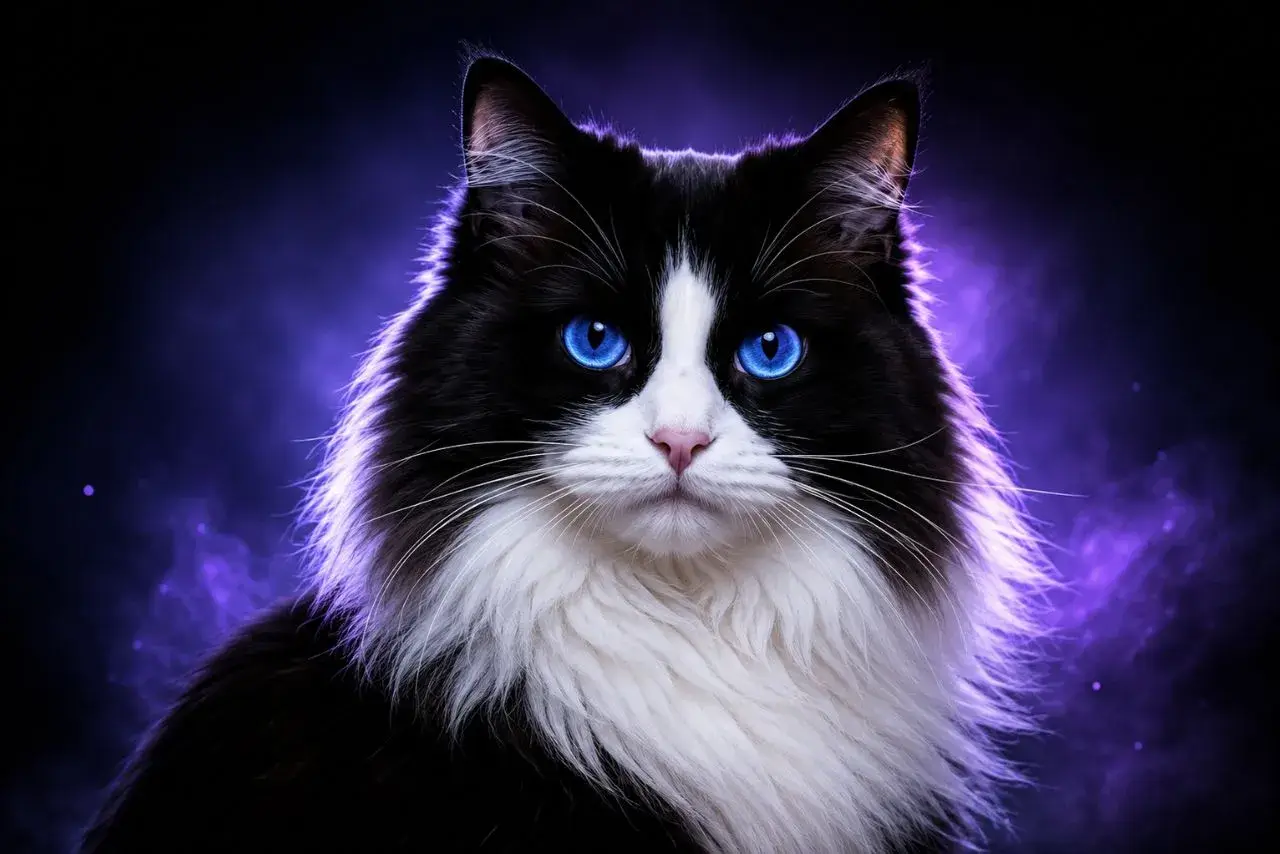
A black-and-white cat with a fluffy coat can look as though it is wearing a tiny formal suit. This look is commonly called a tuxedo pattern, but it is important to distinguish a coat pattern from a cat breed. A cat described as a “tuxedo Ragdoll” may resemble a Ragdoll, yet a solid black-and-white coat is not the usual pattern described in major Ragdoll breed standards. The most reliable way to confirm pedigree is documentation from a reputable breeder or registry, not appearance alone.
This guide explains what people mean by a tuxedo black and white Ragdoll cat, how the pattern compares with recognized Ragdoll colors, what temperament and care to expect, and how to choose a healthy cat responsibly. Breed-standard details are based on guidance from The International Cat Association (TICA) and The Cat Fanciers’ Association (CFA).
What Is a Tuxedo Black and White Ragdoll Cat?
“Tuxedo” is an informal name for a black-and-white coat pattern, often with a dark back and head plus white chest, paws, or facial markings. It is not a separate cat breed or an official Ragdoll color name. TICA explains that solid black-and-white cats are often nicknamed tuxedo cats, regardless of breed.
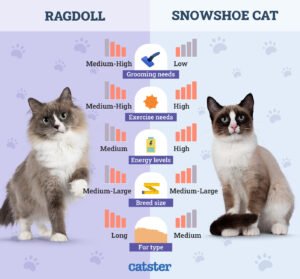
Ragdolls are a distinct breed known for a semi-long, silky coat, blue eyes, a large muscular body, and pointed coloring. Recognized Ragdoll patterns include colorpoint, mitted, and bicolor. In a typical bicolor Ragdoll, the colored areas are concentrated around the ears, tail, and mask, with white on the chest, underside, legs, and often an inverted white “V” on the face. That differs from the classic tuxedo look, which usually has a mostly black coat and white bib or paws.
Is a Black and White Tuxedo Cat a Purebred Ragdoll?
Not necessarily. A cat’s appearance alone cannot confirm its breed. A mostly black cat with a white chest and paws may be a domestic shorthair or longhair, a mixed-breed cat, or a cat whose ancestry is uncertain. Because recognized Ragdoll standards describe pointed coats and blue eyes, a solid black-and-white tuxedo pattern would generally not match the standard Ragdoll show appearance.
If pedigree matters to you, ask for registration or pedigree records and verify them with the relevant registry. A DNA test may offer clues about ancestry, but it should not be treated as a substitute for formal pedigree documentation. If you simply want a loving companion, health, temperament, and a good match for your home matter more than a label.
Ragdoll Colors and Patterns Explained
Ragdolls are pointed cats. Their bodies are generally lighter than their darker “points,” which appear on areas such as the face, ears, legs, and tail. Breed organizations recognize several point colors and distinct patterns, although exact accepted colors and show rules can vary by registry.
- Colorpoint: Colored points with no white spotting in the standard pattern.
- Mitted: Pointed coloring with white paws, plus white markings on the chin and underside.
- Bicolor: More extensive white on the face, chest, underside, and legs, often including an inverted white “V” on the face.
Common Ragdoll point colors include seal, blue, chocolate, lilac, red, and cream, with additional variations such as lynx and tortie recognized by breed organizations. For the current descriptions, consult TICA’s Guide to Cat Colors and Patterns and its Ragdoll Breed Profile.
Tuxedo Pattern vs. Ragdoll Bicolor Pattern
These patterns can both include dark and white areas, but they are not interchangeable. A tuxedo cat is usually described by a black-and-white contrast, often with a white chest and paws. A bicolor Ragdoll has a pointed coat pattern and specific distribution of white. A photo can help describe markings, but it cannot establish pedigree by itself.
Personality and Temperament
Ragdolls are commonly described as affectionate, people-oriented, and relatively relaxed. Many enjoy being near their families and playing interactive games. Individual cats still differ, and no coat color or marking guarantees a particular personality. A tuxedo-patterned mixed-breed cat may be just as affectionate as a pedigree cat, while a Ragdoll may be playful, shy, or independent depending on its individual temperament and experiences.
Spend time with a cat before adopting when possible. Ask the caregiver how the cat responds to handling, household noise, visitors, children, and other pets. Look for a cat whose needs and energy level fit your daily routine rather than choosing by appearance alone.
Size, Coat, and Grooming Needs
Ragdolls are medium-to-large, slow-maturing cats with a semi-long, silky coat. Their coat can tangle, particularly around the armpits, behind the ears, and along the hindquarters. Brush or comb the coat several times each week, adjusting the routine to the individual cat’s coat and shedding. Check gently for mats rather than pulling at them.
A Simple Weekly Care Routine
- Comb the coat and check for tangles or mats.
- Check the ears, eyes, claws, and skin for changes.
- Provide fresh water and measure a complete, balanced cat food appropriate for age and health.
- Clean the litter tray regularly and monitor changes in urine or stool habits.
- Offer daily play, scratching surfaces, hiding places, and comfortable resting areas.
- Arrange routine veterinary checkups and keep vaccinations and parasite prevention up to date as advised by your veterinarian.
Baths are not usually needed on a fixed schedule. Bathe only when necessary, use a cat-safe product, and ask a veterinarian or groomer for help if the coat is heavily matted or the cat becomes distressed. White fur does not need special bleaching or cosmetic treatment.
Health and Veterinary Considerations
Do not assume a cat is healthy or unhealthy because of its coat pattern. Health depends on genetics, early care, environment, nutrition, and veterinary attention. Ragdoll owners should ask breeders about health screening relevant to the breed, including screening for hypertrophic cardiomyopathy (HCM), a heart condition known to occur in cats. A screening result lowers uncertainty but cannot guarantee that a kitten will never develop a health problem.
Before bringing a cat home, request veterinary records, vaccination and parasite-treatment history, and details of any known medical concerns. Arrange an initial veterinary examination soon after adoption. Seek veterinary advice promptly for breathing difficulty, collapse, repeated vomiting, not eating, straining to urinate, or any sudden marked change in behavior.
How to Find a Black and White Cat With Ragdoll-Like Features
If you are looking for a cat with a tuxedo coat and a fluffy, Ragdoll-like appearance, keep an open mind about breed labels. You may find a suitable companion through a reputable rescue, shelter, or responsible breeder. Be wary of sellers who charge a premium for a “rare tuxedo Ragdoll” without verifiable pedigree and health documentation.
Questions to Ask a Breeder or Rescue
- Can you provide veterinary records and explain the kitten’s health history?
- If the cat is advertised as a purebred Ragdoll, can you provide verifiable pedigree or registration documents?
- What health screening has been performed on the parents, and can I review the results?
- Has the kitten been raised in a clean environment and gently socialized?
- What support is available if the cat develops a health or adjustment problem after coming home?
- What is included in the adoption fee, and what is the return or rehoming policy?
A responsible provider will welcome reasonable questions and will not pressure you to pay immediately. Avoid sellers who will not show the cat’s living conditions, refuse basic records, or offer to send a kitten without an appropriate handover process.
How Much Does a Tuxedo Ragdoll Cat Cost?
There is no reliable universal price for a “tuxedo Ragdoll,” partly because the label may refer to cats with different ancestry. Adoption fees, breeder prices, location, age, health care, pedigree, and what is included all affect cost. A higher price does not prove that a cat is rare, purebred, or responsibly bred.
Budget beyond the initial fee for food, litter, scratching posts, carriers, grooming supplies, vaccinations, routine veterinary care, and unexpected medical bills. Compare providers on health, transparency, and the cat’s welfare rather than on coat pattern alone.
Frequently Asked Questions
Can a Ragdoll cat be black and white?
Traditional Ragdoll breed standards describe pointed coloring, usually with blue eyes and recognized colorpoint, mitted, or bicolor patterns. A solid black-and-white tuxedo coat does not fit the usual standard Ragdoll appearance. Confirm claimed pedigree with registry documentation rather than coat appearance alone.
Are tuxedo Ragdoll cats rare?
“Tuxedo Ragdoll” is not a standardized breed variety, so there is no dependable rarity figure for it. Black-and-white tuxedo cats occur across the wider cat population. Be cautious of claims that a cat is exceptionally rare unless the seller can clearly explain and document what they mean.
Do tuxedo cats have blue eyes?
Not necessarily. Eye color varies with ancestry and coat genetics. Blue eyes are characteristic of traditional pointed Ragdolls, but a black-and-white tuxedo cat may have green, gold, copper, or other eye colors.
Are black and white Ragdoll cats good family pets?
A cat’s suitability for a family depends on its individual temperament, socialization, health, and how people treat it. Many Ragdolls are sociable, but no breed or coat pattern guarantees that a cat will enjoy being handled. Teach children to interact gently and give the cat a safe place to retreat.
How often should I brush a Ragdoll or long-haired tuxedo cat?
Start with several gentle brushing sessions each week and increase frequency if the coat tangles or sheds heavily. Use a comb suitable for the coat and check common matting areas. If a mat is tight against the skin, ask a veterinarian or professional groomer for help rather than cutting it with scissors.
Where can I adopt a black and white fluffy cat?
Check local shelters and established rescue organizations, and ask about the cat’s temperament, grooming needs, and medical history. If you want a pedigree Ragdoll, contact a responsible breeder and verify the registration paperwork. A fluffy mixed-breed cat may be an excellent companion even without a pedigree.
Final Thoughts
A tuxedo black-and-white cat can be striking, affectionate, and a wonderful companion. The key distinction is that “tuxedo” describes a coat pattern, not a Ragdoll breed variety. Learn the difference between tuxedo markings and recognized Ragdoll patterns, verify pedigree claims, and prioritize health, welfare, and temperament when choosing a cat.
For more cat-related information, visit the Cats Website Home Page. For breed details, use the original resources from TICA’s Ragdoll Breed Profile, CFA’s Ragdoll Breed Information, and TICA’s Cat Color Guide.